Insights
Master MiCA: Key EU Crypto Asset Regulations Explained
Discover MiCA: EU’s first crypto regulatory framework. Learn its impact and compliance steps.
What is MiCA?
The European Union’s Markets in Crypto-Assets Regulation (MiCA or MiCAR), officially Regulation (EU) 2023/1114, is the first cross-jurisdictional regulatory and supervisory framework for crypto asset service providers (CASPs) operating within the EU. In conjunction with Regulation (EU) 2023/1113 on information accompanying transfers of funds, the EU’s regulatory framework for crypto sets compliance standards for anti-money laundering and counter-terrorist financing (AML/CFT), introduces a comprehensive licensing regime to enhance market integrity, and requires consumer protection measures to protect crypto asset holders. These new rules provide a clear and uniform regulatory environment, ensuring the integrity and security of the EU’s crypto space.
Key Crypto Products Covered by MiCA
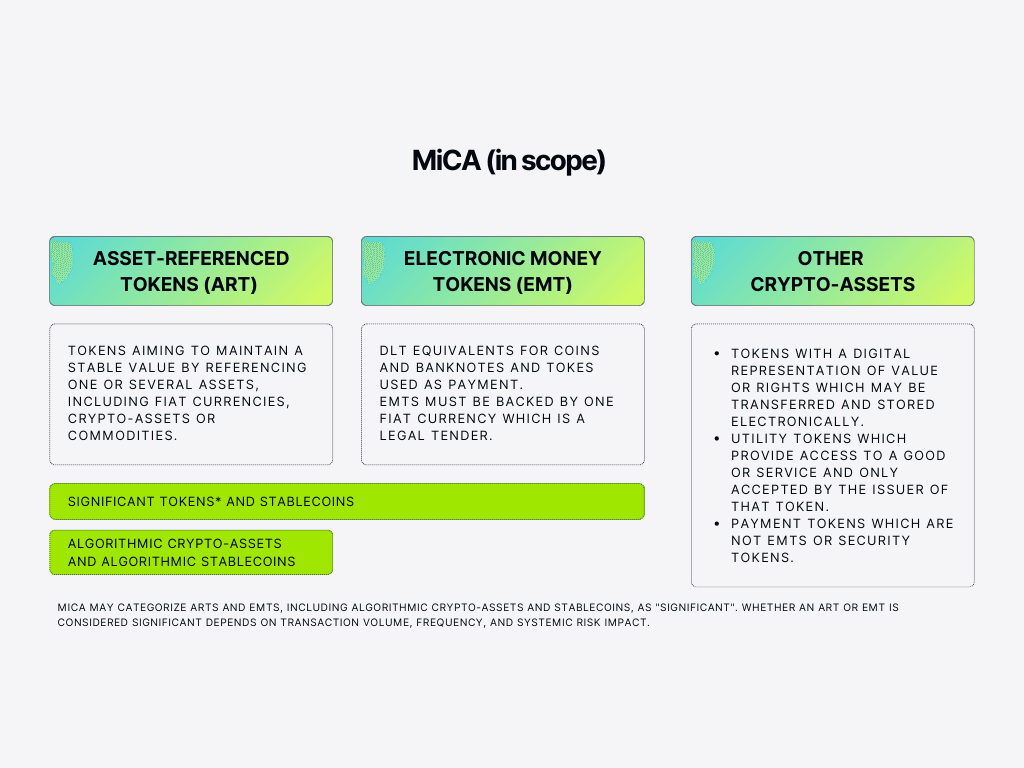
MiCA defines a crypto asset as a digital representation of value or rights that can be transferred and stored via distributed ledger technology. This regulation divides crypto assets into three categories, each with specific regulatory requirements based on their value stabilization mechanisms.
Electronic or e-money tokens (EMTs) are crypto assets that hold value by referencing a single official currency. To qualify as electronic money, EMTs must follow strict regulatory standards, including the ability to be exchanged at par value for fiat currency.
Asset-referenced tokens(ARTs) are crypto assets that maintain their value by referencing other values, rights, or combinations of these, including one or more official currencies. This group includes crypto assets backed by various assets, excluding e-money tokens.
The final category includes all other crypto assets that are neither e-money nor asset-referenced tokens, such as utility tokens. These are not considered financial instruments under regulatory frameworks like The Markets in Financial Instruments Directive (MiFID II).
It is important to note that MiCA regulations do not cover all non-fungible tokens (NFTs), only applying to NFTs that resemble assets governed by MiCA. The legislation does not apply to unique NFTs.
Does MiCA Impact Your Business?
MiCA will impact a broad range of entities operating within the cryptocurrency space in the European Union:
Crypto Exchanges and Trading Platforms: Platforms that facilitate the exchange of crypto assets for fiat currencies, other crypto assets, or digital currencies must comply with MiCA’s regulatory framework, including requirements for authorization, ongoing supervision, and operational transparency.
Custody Service Providers: Firms offering wallet services for storing and managing cryptocurrencies, particularly where the service involves holding customers’ cryptographic keys, must ensure compliance with MiCA’s security protocols and consumer protection measures.
Crypto Payment Providers: Services enabling businesses and individuals to accept cryptocurrencies as payment will be covered by MiCA, which requires mechanisms to prevent money laundering and ensure the traceability of all transactions.
Crypto Asset Issuers: Entities issuing crypto-assets, including ICOs (Initial Coin Offerings) and stablecoins, are subject to MiCA’s transparency and consumer protection rules. This includes detailed requirements for authorization, passporting, and ongoing supervision.
Non-EU Crypto Firms: Companies based outside the EU that offer services to EU customers will also need to comply with MiCA. However, MiCA allows certain exemptions under ‘reverse solicitation,’ where services are provided at the direct request of an EU customer under stringent conditions.
DeFi Projects: Decentralized Finance (DeFi) platforms, particularly those offering services similar to regulated financial activities, may be affected depending on how their operations align with the definitions of crypto-asset services under MiCA.
Companies Offering Derivatives and Other Financial Instruments Linked to Crypto Assets: Depending on the nature of their products, these companies may need to comply with MiCA and other financial regulations.
Crypto Asset Advisors and Brokers: Firms providing investment advice or brokerage services related to crypto assets will also need to meet MiCA’s requirements for professional conduct and operational transparency.
The scope of MiCA is comprehensive and designed to encompass nearly all business activities involving crypto-assets within the EU. This regulatory approach ensures that both EU-based and non-EU firms engaging with EU customers maintain a high standard of integrity, security, and consumer protection. By understanding the full extent of these regulations, CASPs can prepare accordingly to ensure compliance and maintain access to the EU market.
Compliance: What You Need To Do
For Crypto-Asset Service Providers (CASPs) operating within the European Union, understanding and adhering to the MiCA regulations is crucial. Here’s a streamlined guide to help ensure MiCA- compliance:
Registration and Licensing
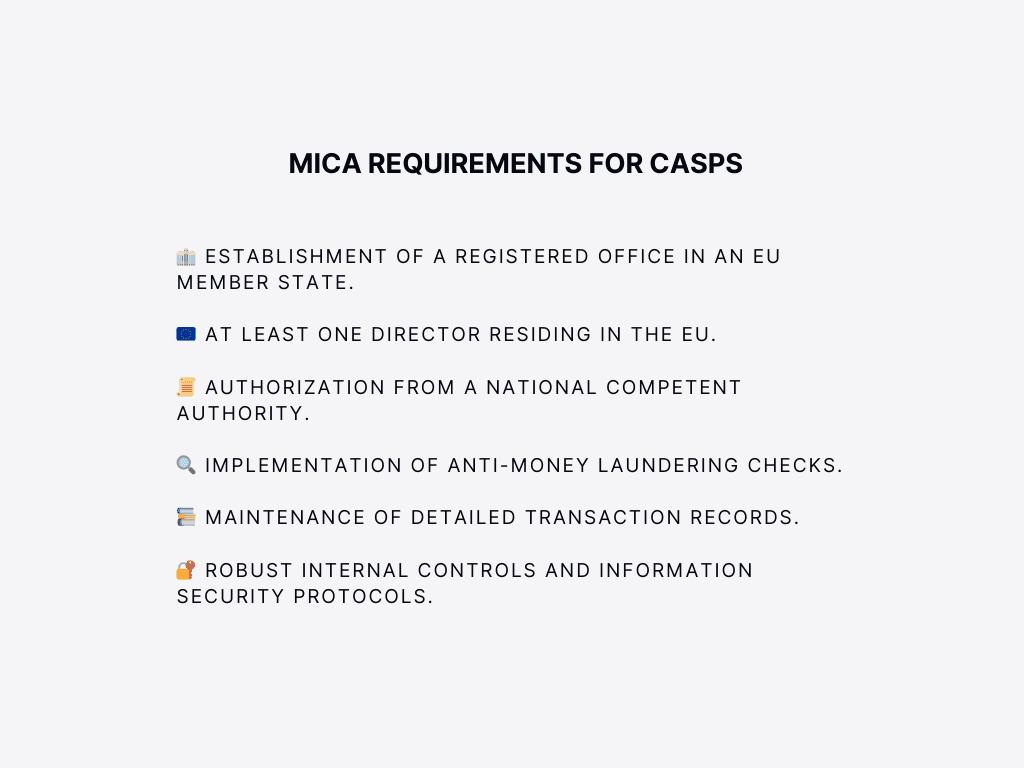
EU Establishment: CASPs must have a registered office in one of the EU Member States to operate legally.
Securing Authorization: Authorization from a National Competent Authority (NCA) in the EU is required to provide any crypto-asset services. This authorization acts as a license to operate across the EU.
Passport Benefits: With authorization in one Member State, CASPs can seamlessly offer services across other EU countries, promoting a broader market reach without requiring multiple licenses.

Sofia Di Stefano

Read more




STAY UPDATED
Get the latest
compliance insights
Receive product updates, industry trends and operational
insights directly in your inbox.